Published December 5, 2025
By Anthony Pennacchi & Sons Team
Anthony Pennacchi & Sons Blog
Should You Coat Your Florida Home?
Elastomeric Coating Facts from 4th-Generation Experts
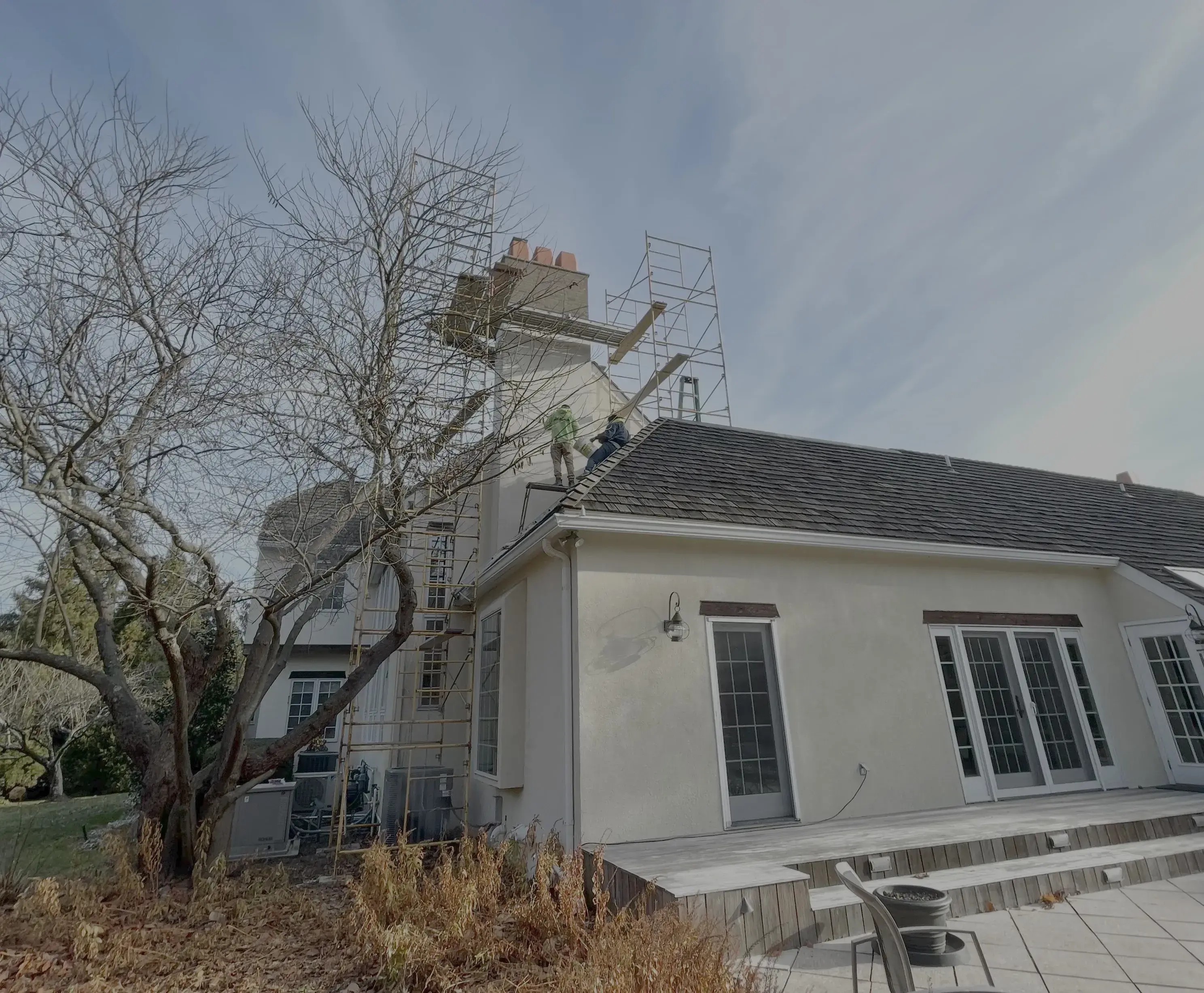
Most Florida homeowners paint their stucco every few years and assume they are protecting it. They are not. Standard exterior paint has zero crack-bridging ability and minimal moisture resistance. It looks good for 18 months, then the hairline cracks reappear and water resumes its path into the wall assembly behind the stucco. Elastomeric coating solves the problem standard paint pretends to fix. Here is how to tell if your home actually needs it and how to avoid overpaying for the wrong application.
You’ll learn
- • What elastomeric coating is and how it works
- • Benefits, uses, and limitations in South Florida
- • How surface prep, climate timing, and product choice affect lifespan
- • Common mistakes that shorten coating life in coastal Florida
- • Lifespan, warranty basics, and when it’s the right solution
What Is an Elastomeric Coating
More than “thick paint,” elastomeric coating is a flexible membrane for exterior walls that stretches with thermal movement, bridges hairline cracks, and blocks moisture, ideal for South Florida’s sun, rain, and humidity.
How It Works
- • Flexible membrane moves with walls to reduce cracking
- • Handles expansion and contraction from daily temperature swings
- • Bridges hairline cracks (e.g., 1/16-inch) to keep water out
Elastomeric vs. Traditional Paint
- • Thickness: 10–15 mils vs. 2–3 mils for typical paint
- • Flexibility: Effective crack-bridging vs. brittle paint films
- • Longevity: 10–20 years vs. ~5–7 years for paint (with proper prep)
In coastal Palm Beach County, that mil-thickness gap is the difference between a wall that sheds wind-driven rain and a wall that absorbs it. During hurricane bands and summer thunderstorms, sideways rain forces water into every hairline crack a 2-mil paint film cannot bridge. A 12-mil elastomeric membrane stretches across those cracks and keeps the moisture on the outside, where it belongs. That is why we recommend it for properties within a few miles of the coast, where standard paint typically fails 30–40% faster than inland.
Ready to protect your West Palm Beach home? Visit our service page for Elastomeric Coating services in West Palm Beach.
Where It’s Used
- • Stucco exteriors: Bridges hairline cracks and blocks humidity-driven moisture.
- • Masonry & concrete walls: Vapor-permeable options let walls breathe while keeping rain out.
- • Above-grade vertical surfaces: Not for roofs or below-grade walls.
Best Substrates for Florida Homes
Most South Florida homes are built with concrete masonry unit (CMU) block walls finished with three-coat stucco. That assembly is exactly what elastomeric coating is designed for. The membrane bonds tightly to cured stucco, follows the slight surface texture, and bridges the hairline shrinkage cracks that develop along control joints and around window openings. It also works well on poured concrete walls, tilt-up commercial panels, and properly prepared painted surfaces, as long as the existing paint is sound and not chalking. We do not recommend elastomeric on wood siding, EIFS systems without manufacturer approval, or any wall with active moisture intrusion that has not been corrected first.
Looking to restore concrete? See our guide “Why South Florida Concrete Corrodes Faster Than Anywhere in the U.S.”
Key Benefits for South Florida Homes
- • Crack-bridging for stucco and masonry
- • Added resistance to wind-driven rain and humidity
- • UV reflectance that reduces surface temperature and slows substrate fatigue
- • Smooths minor imperfections for a uniform finish
- • Reduced repainting cycles (10–15+ years with proper prep)
Quick Reference
| Benefits | Crack-bridging, moisture resistance, UV protection, uniform finish, reduced maintenance |
| Lifespan | 10–20 years on well-prepared exterior walls (exposure-dependent) |
| Warranty | Materials: 5–15 years; Labor: 1–5 years; excludes poor prep or structural/moisture issues |
| Ideal Surfaces | Stucco, masonry, concrete above grade |
| Limitations | Not for structural cracks, active moisture, roofs, or below-grade walls; requires proper prep |
How Surface Preparation Determines Coating Lifespan
In our 75+ years working on Florida and Northeast masonry, the single biggest predictor of how long a coating lasts is what happens before the first gallon opens. A premium elastomeric product applied over poor prep will fail faster than a budget paint applied over excellent prep. The five steps below are non-negotiable on every Anthony Pennacchi & Sons project.
- Pressure washing: 2,500–3,000 PSI to remove chalk, dirt, salt deposits, and loose paint. Walls within two miles of the coast accumulate measurable salt residue that must be rinsed off, or the coating bonds to salt instead of substrate.
- Crack and substrate repair: Hairline cracks under 1/16-inch get bridged by the membrane. Wider cracks need to be routed, filled with a flexible sealant, and allowed to cure before coating. Spalling stucco gets patched with a polymer-modified mortar.
- Mildew remediation: A diluted bleach solution or commercial mildewcide kills biological growth. Coating over live mildew traps spores and causes bubbling within 12–18 months.
- Priming: Chalky, porous, or previously painted walls need a bonding primer matched to the elastomeric topcoat. Priming is non-optional on most repaint scenarios in South Florida.
- Moisture verification: A moisture meter reading above 16% means the wall is too wet to coat. We diagnose and correct the source before applying anything that would seal water inside.
Limitations & When It's Not Right
- • Not a fix for structural or deep cracks
- • Requires clean, sound, dry surfaces
- • Avoid if moisture is trapped behind walls
- • Not suitable for fresh stucco that has not cured a full 28 days
- • Not recommended on roofs, below-grade walls, or substrates with active leaks
Common Mistakes That Cut Coating Life in Half
When a homeowner tells us their elastomeric coating failed in three years instead of fifteen, it is almost always one of these issues. Avoiding them is more important than the brand of product on the wall.
- Applying over fresh stucco: Stucco needs a minimum 28-day cure before any coating. Applying earlier traps alkaline moisture and burns through the membrane.
- Skipping the primer: Chalky surfaces and previously painted walls need a bonding primer. Without it, the elastomeric peels in sheets within a few seasons.
- Rolling too thin: The product specification calls for 10–15 mils dry film thickness. Stretching a single coat to cover more square footage cuts thickness in half and removes the crack-bridging benefit.
- Ignoring active moisture: A leak behind the wall does not stop because you painted over it. The coating traps the moisture and accelerates substrate damage.
- Wrong product for the substrate: Dense concrete walls need a vapor-permeable formulation. Standard acrylic elastomeric on a high-moisture-content concrete wall blisters within a year.
- Painting during a humidity spike: Application above 85% relative humidity slows cure and weakens the film. Florida summers require careful scheduling around afternoon storms.
Types of Elastomeric Coatings
- • Acrylic: Common for stucco/masonry; UV-resistant and flexible. Strong all-around choice for residential Palm Beach County homes.
- • Silicone/Urethane: Enhanced moisture and UV protection; good for extreme coastal exposure within a half-mile of the ocean.
- • Silicate-modified hybrids: Vapor-permeable, ideal for older masonry walls that need to breathe. Often used on cathedral and historical work.
Florida Application Timing
Climate windows matter as much as product selection in South Florida. Manufacturer specifications generally call for ambient temperatures between 50°F and 90°F, surface temperatures within 20 degrees of ambient, and relative humidity below 85%. In practice, that rules out most afternoons from June through September, when humidity climbs and pop-up storms threaten the cure window.
Our preferred application season runs November through April, the dry season. We schedule application in early-to-mid morning so the coating reaches initial cure before the late-day humidity spike. We also confirm a 24-hour clear forecast before opening a gallon. During hurricane season, we will pause active jobs and tarp completed sections rather than push through a marginal weather window. A coating cured properly on day one outlasts a coating rushed through bad weather by years.
Cost vs. Lifecycle Value
Elastomeric coating costs more per square foot than traditional acrylic paint. The relevant comparison is not the up-front number, it is the lifecycle math. A typical Palm Beach County stucco home repainted with standard acrylic latex needs a fresh exterior every 5–7 years. The same home coated with a properly applied elastomeric system runs 12–20 years between full recoats. Over a 20-year window, that is one coating cycle versus three repaint cycles. The labor cost of three pressure-wash, prep, and paint jobs almost always exceeds the premium of a single elastomeric system, before factoring in the moisture-protection value of the membrane itself.
Lifespan & Maintenance
Expect 10–20 years with proper prep and exposure management. Inspect every 3–5 years and touch up minor cracks or fading to maximize life. South-facing and west-facing walls take more UV exposure and tend to fade first; plan for selective recoats on those elevations before the rest of the house needs attention.
Priming & Warranty Basics
- • Priming improves adhesion on porous or previously painted walls.
- • Typical warranties: Materials 5–15 years; Labor 1–5 years (excludes poor prep or existing moisture/structural issues).
- • Always confirm whether the warranty is pro-rated or full-replacement, and whether labor is covered for the full term.
Choosing the Right Contractor
- • Experience with stucco/masonry in South Florida
- • Florida state license (Anthony Pennacchi & Sons holds CGC1538576)
- • Documented surface prep process, not just “we’ll wash it down”
- • Knowledge of coastal climate, salt exposure, and product selection
- • Manufacturer-certified installer for the specific coating system
- • Written warranty that names both materials and labor coverage terms
Service Areas
Serving Palm Beach, West Palm Beach, Palm Beach Gardens, Lake Worth, North Palm Beach, Riviera Beach, Boynton Beach, Boca Raton, Delray Beach, Jupiter, Fort Lauderdale, North Miami Beach, and nearby communities throughout Palm Beach, Broward, and Miami-Dade counties.
FAQs
Can elastomeric coating trap moisture?
If walls have pre-existing moisture, coating can trap it. Dry and repair first, and use a vapor-permeable formulation on dense substrates.
What surfaces are suitable?
Stucco, masonry, and concrete above grade. Not for roofs, below-grade walls, or wood siding.
What are typical warranties?
Materials 5–15 years; labor 1–5 years; excludes poor prep or structural issues. Confirm pro-rated vs. full-replacement terms in writing.
How often is maintenance needed?
Inspect every 3–5 years; touch up minor cracks or fading on south- and west-facing elevations first.
Is it worth the investment?
For South Florida homes, it reduces maintenance and protects walls long term. Over a 20-year window, one elastomeric cycle typically beats three traditional repaints in total cost.
How long does application take on a typical home?
A 2,500–3,500 sq ft single-story home usually takes 5–7 working days including pressure washing, repairs, priming, and two coats. Larger homes and complex elevations add time.
Can it be tinted to match my existing color?
Yes. Most premium elastomeric systems accept a wide tint range, including custom color matching to existing siding, trim, or HOA-approved palettes.
Will it change the texture of my stucco?
Slightly. The membrane smooths very fine surface variation and softens heavy texture. We can apply with a roller, brush, or sprayer to control the final look.
What can I do to prepare before the contractor arrives?
Trim landscaping at least three feet away from exterior walls, move patio furniture and grills clear of the work area, and identify any active leaks or stains so the contractor can address the source before coating.
Need help with your property?
4th-generation experts. 75+ years of experience. estimates.
Call (561) 475-0775No obligation. FL License CGC1538576.
Related articles
Need coating help?
Schedule an inspection to see if elastomeric coating is right for your home.
Book an Inspection